 Getty ImagesSave this storySave this story
Kris Jenner’s facelift: So, we meet again.
Let me first acknowledge the eyerolls and criticism that this story may inspire and clearly state that I, too, think we are spending entirely too much time discussing this woman’s face. But over the past few days, it’s been impossible to ignore the renewed frenzy around Jenner’s current appearance and how she (and nearly every plastic surgeon on social) may or may not feel about it. And as a journalist covering the plastic surgery beat, well, here I am. So what’s behind the hullabaloo? A report from Radar, which reads: “A source close to Jenner told us, ‘Kris Jenner’s facelift is already slipping. She is not happy with the results and is desperate to get a revision—she feels it has not held the way she expected.’”
Is this true? Who knows? (Only Jenner and her surgeon, that’s who.) Still, plastic surgeons have been quick to post their various takes on Jenner’s alleged dissatisfaction. Some have criticized the SMAS facelift that Jenner supposedly received, suggesting the procedure doesn’t hold up as well as the deep plane facelift. Others have called these kinds of public jabs “a bad look” for the field, noting how they discourage transparency and erode patient trust.
Beverly Hills plastic surgeon Charles Galanis, MD, posted in his stories that he heard “from a very reliable source that this [Jenner rumor] is actually not true and the celebrity in question didn’t express this.” He went on to say, “The number of people I’ve seen gleefully hopping on social media platforms to knock down the surgeon or knock down the cost or knock down the technique, it doesn’t sit right with me. I just think as a collective, we can do more to prop each other up or educate the masses in a positive way, without having to step on someone else to do it.” I’m writing with this in mind. We should operate under the assumption that the Jenner news is hearsay and that any related chatter is utter speculation.
We don’t know how Jenner really looked before, during, or after her surgery.
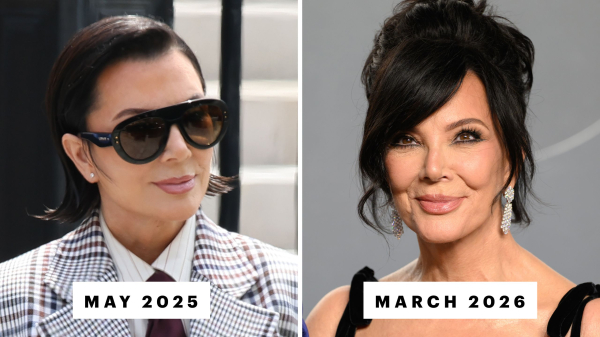
Here’s what we do know: Last May, Page Six reported that a rep for Jenner had confirmed that New York City plastic surgeon “Dr. Steven Levine did Kris Jenner’s recent work.” That was the extent of the statement. Jenner later told Vogue Arabia that she did, indeed, have a facelift, “a refresh” of one she’d had 15 years prior. She also spoke about her surgery—and gushed about her surgeon—on the Not Skinny But Not Fat podcast and then invited Dr. Levine to her 70th birthday party. But Jenner didn’t disclose the specifics of her work or say when it was done. And, unlike Denise Richards, who recently revealed the details of her facelift, Jenner didn’t share her standardized before-and-after photos. (Consistent in every way, these pictures are taken in the weeks leading up to and following surgery to document the changes that surgeons make.) The photos that flooded the internet amidst the Jenner-Levine hype featured Jenner in Paris (not her surgeon’s NYC office), professionally made-up, often wearing large sunglasses, and often filtered. There was something quixotic about it all. The truth was, as Allure contributor Val Monroe astutely noted in early June 2025, “there’s really no way of knowing what Kris Jenner actually looks like.”
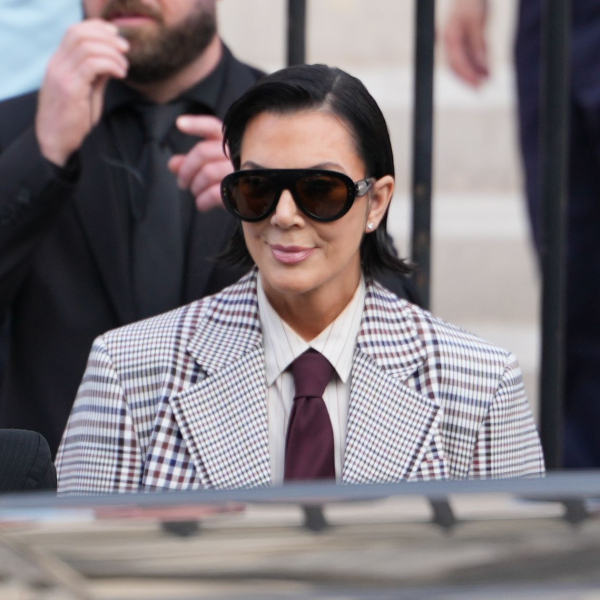
Kris Jenner in May 2025
Getty Images
That’s our starting point: complete uncertainty. We don’t know how Jenner really looked before, during, or after her surgery. And about that facelift: While many laypeople on social media are insisting that Jenner had a deep plane facelift, it’s common knowledge in the plastic surgery community that Dr. Levine specializes in a particular type of SMAS facelift. (SMAS stands for superficial musculoaponeurotic system and refers to the fibrous tissue layer that surgeons target, in one way or another, during a facelift.) As Allure reported last May, Dr. Levine is known for performing a lateral SMASectomy—a technique that lifts the lower face by removing a strip of the SMAS before suturing its edges back together—in combination with a deep structural neck lift, which sculpts the tissues underneath the platysma muscle.
Facelifts typically fall faster on patients who are a) older and b) have had multiple facelifts in their lifetimes.
Was it a good facelift? I’d imagine so. Dr. Levine was renowned long before Jenner entered his OR. He was trained by a legendary New York City plastic surgeon, and is, by all accounts, a highly skilled surgeon who cares about his patients and their outcomes. At the time of Jenner’s facelift, however, Dr. Levine was working with 69-year-old tissues—and studies generally show that facelifts on older patients are less durable than those on younger patients.
Would a deep plane facelift have fared better? No one can say for sure. Deep plane proponents often assert that their results outlast SMAS results, because they go underneath the SMAS to release certain ligaments before re-suspending the tissues. They claim that this maneuver resets the anatomy in a tension-free way, yielding a longer-lasting lift. While some types of SMAS facelifts also address the ligaments, others, like the SMASectomy, avoid the deep plane where ligaments reside and instead tailor the SMAS from above.
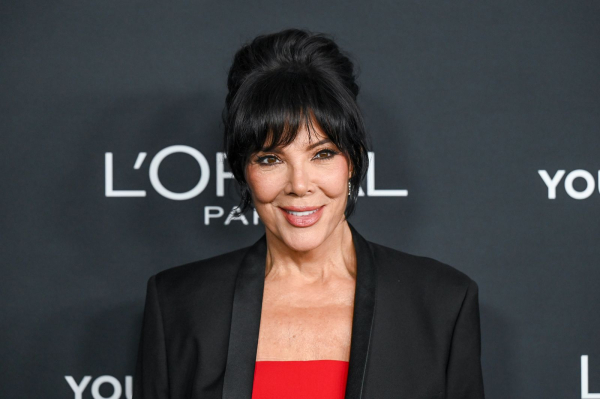
Kris Jenner in December 2025
Getty Images
Now, some surgeons have suggested, based on their experience revising SMAS-style facelifts, that the results of a traditional SMAS lift can start to fade as soon as three to five years after surgery. But a new study in Facial Plastic Surgery & Aesthetic Medicine says differently. According to the researchers, deep plane facelifts last, on average, 10.9 years—slightly longer (12.4 years) for those who have their first lift at or before age 53; slightly shorter (9.3 years) for patients who wait until they’re 54-plus before going under the knife. The study also looked at the longevity data on SMAS facelifts, noting an approximate 8- to 12-year lifespan. Another relevant point: When reviewing their own deep-plane outcomes, the authors found that patients who had three or four facelifts “returned sooner after their revisions than those returning after their primary [or first-time] deep plane lifts.” (I’m simplifying here; if you want the full scoop on the study, go read the deep dive I wrote for my newsletter Aesthetics Unfiltered.)
These findings help inform our understanding of what may be going on with Jenner (if, in fact, her results are fading). Beyond comparing the durability of deep plane and SMAS lifts, the study underscores the fact that facelifts typically fall faster on patients who are a) older and b) have had multiple facelifts in their lifetimes. Jenner checks both of those boxes.
That said, and this bears repeating, we don’t know if her lift is truly “slipping.” A more likely explanation: The “honeymoon period”—what surgeons call the early post-op phase, when the face is swollen, smooth, and taut, and looks especially youthful before puffiness subsides and tissues settle—is simply giving way to a more realistic result. This is normal and expected with any facelift, which is why surgeons urge us not to judge a result until the one-year mark. Of course, in the absence of real, bare-faced, unfiltered photos from last spring, what’s to actually judge?
Leave a Reply