 Collage: Paula Balondo; Source images: Courtesy of Allure editors and brandsSave this storySave this story
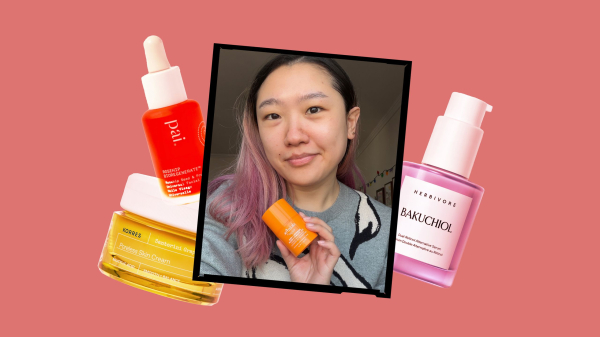
The best retinol alternatives are a relief if your skin has ever pushed back on vitamin A. Yes, retinol is still the gold standard because “it’s great for cell turnover, collagen stimulation, and overall skin renewal,” says Aderonke Obayomi, MD, a board-certified dermatologist based in New York City. However, she acknowledges that not everyone can tolerate the dryness, peeling, and general learning curve that can come with it.
“The ingredients I reach for most as retinol alternatives are vitamin C, azelaic acid, peptides, bakuchiol, and certain exfoliating acids like glycolic and lactic acid,” she says. Each one tackles an important piece of what retinol does: Vitamin C, for instance, brightens and boosts collagen, azelaic acid calms and evens tone, peptides help firm, and bakuchiol gets the closest to retinol’s effects—without the irritation. The trade-off is that you’re not getting everything in one step, but as Dr. Obayami puts it, “combining a couple of them strategically can get you really meaningful results.” And if your skin is sensitive, that kind of gentler, mix-and-match approach might just be music to your ears.
Our Top Retinol Alternatives
- Best with Peptides: SkinCeuticals P-Tiox, $150
- Best with Azelaic Acid: Naturium Azelaic Topical Acid 10%, $20
- Best with Vitamin C: SkinFix Brighten + Firm 15% Vitamin C Serum, $69
- Best with Bakuchiol: Herbivore Botanicals Dual-Retinol Alternative Face Serum, $68
- Best with Niacinamide: La Roche-Posay Mela B3 Serum, $45
Frequently Asked QuestionsLargeChevron
- What are the most popular ingredients that dermatologists consider retinol alternatives?
- Will I still get peeling or purging with retinol alternatives?
- Meet the experts
- How we test and review products
- Our staff and testers
Best with Peptides: SkinCeuticals P-Tiox
 Save to wishlist
SkinCeuticals
P-Tiox
Bluemercury
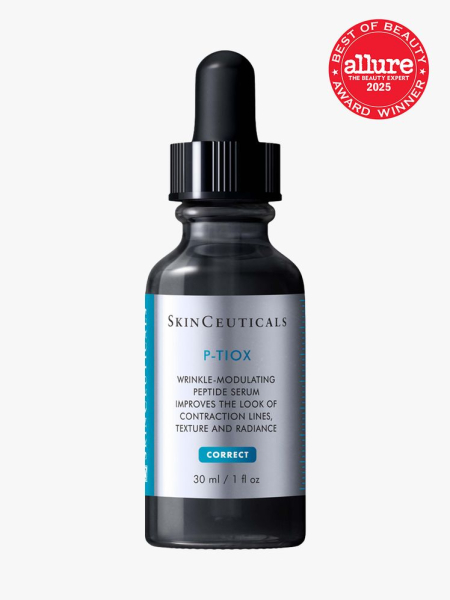
Why it's worth it: Instead of relying on vitamin A, SkinCeuticals’ P-Tiox uses signal peptides—compounds naturally found in skin that “tell” cells how to behave—to soften the look of expression lines (think forehead creases, cheek folds, and those stubborn 11s between brows) while giving skin a bouncy, plumped finish. It’s a different strategy for smoothing: It’s less about speeding up cell turnover like retinol does, and more about supporting the skin’s structure so it looks smoother and more refined. The two key peptides in the serum dial down signals that trigger facial muscle movement—similar in concept to how Botox works.
A hydrating blend featuring sea kelp extract keeps skin looking glowy, while 5% niacinamide and 1% laminaria extract work to brighten and even tone without the dryness or flaking often associated with traditional retinoids. “It also contains a mild 5% polyhydroxy acid (PHA) exfoliator that further improves texture and dullness,” says Carlos Vieira, a board-certified dermatologist based in Philadelphia. We’ve definitely called this one “Botox in a bottle,” but like most peptide-driven formulas, the results are more gradual and build over time.
Allure editor in chief Jessica Cruel applying the SkinCeuticals P-Tiox
Jessica Cruel
Allure contributor Deanna Pai applying SkinCeuticals P-Tiox
Deanna Pai
Tester feedback from editor in chief Jessica Cruel
LargeChevron
“There is a combination of peptides, niacinamide, and PHA in this serum to help target a very specific sign of aging: expression lines. As someone who loves to laugh, I am particularly concerned about my nasolabial folds a.k.a. smile lines. I use this serum so they don't get any worse. I have to say, I find my filler is lasting a lot longer in that area. It is not a complete replacement for aesthetic treatments like filler or neurotoxin, but this serum can complement those in-office treatments as maintenance. I like to switch off between this and my retinol.” —Jessica Cruel, editor in chief
Tester feedback from contributing commerce editor Deanna Pai
LargeChevron
“I use this in between my neuromodulator appointments and when I just can’t get Botox, like during pregnancy. I’ve found that it helps slow the roll of my forehead lines and can target expression lines where injectables can’t, like around my mouth.” —Deanna Pai, contributing commerce editor
More to know
LargeChevron
- Key ingredients: acetyl hexapeptide-8, dipeptide diamino butyryl, niacinamide, polyhydroxy acid, laminaria extract
- Fragrance-free: yes
Best with Azelaic Acid: Naturium Azelaic Topical Acid 10%
 Save to wishlist
Naturium
Azelaic Topical Acid 10%
Amazon
Ulta Beauty
Natrium
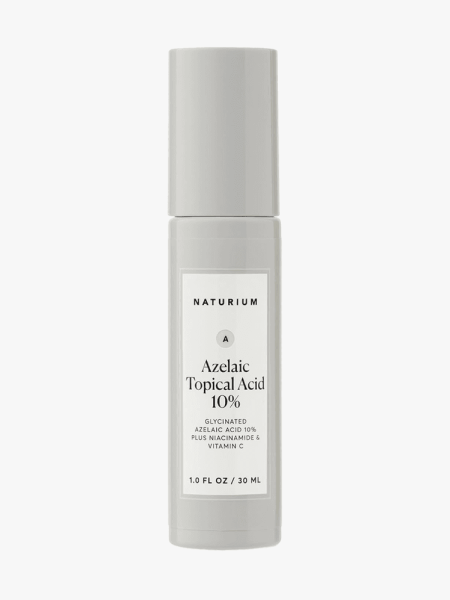
Why it's worth it: Naturium’s Azelaic Topical Acid 10% checks a lot of the same boxes as retinol (smoothes texture, brightens dullness) but is specifically great for sensitive or acne-prone skin because it works without causing the reactivity that can come with vitamin A. This formula pairs 10% azelaic acid with niacinamide to even tone and refine the look of pores, while hydrators—like glycerin, squalane, and murumuru butter—keep skin soft and balanced. There’s also allantoin and oat extract in the mix to soothe sensitivity, plus silica to subtly blur skin texture.
Dermatologists like that this serum strikes a balance between efficacy and ease of use. “I like this serum because studies show [10% azelaic acid] is the ideal concentration to achieve clinical benefits while minimizing irritation,” says Dr. Vieira. “In a couple of months, you should notice an improvement in texture, lighter brown spots, and clearer, more radiant skin,” adds Nazanin Saedi, MD, a board-certified dermatologist based in East Norriton, Pennsylvania, who recommends using a pea-size amount in the morning.
Allure contributing commerce writer Christa Joanna Lee applying the Naturium Azelaic Topical Acid 10%
Christa Joanna Lee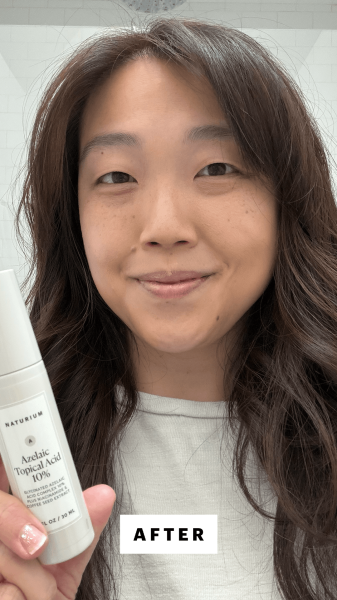
Lee after applying the Naturium Azelaic Topical Acid 10%
Christa Joanna Lee
Tester feedback from contributing commerce writer Christa Joanna Lee
LargeChevron
“At first glance, I wasn’t sure what to expect as the formula is so lightweight and clear, it’s basically looked like water. It spreads instantly, so there’s no aggressive rubbing or blending required; it just melts in and disappears. My melasma has already started creeping back now that I’m spending more time outside, but after a couple of weeks of using this, I swear I’m seeing some soft fading across the brown spots on my cheeks and nose. Since my derm usually has me skip retinoids in the summer (my skin gets way too sun-sensitive), this has become my warm-weather backup.” —Christa Joanna Lee, contributing commerce writer
More to know
LargeChevron
- Key ingredients: potassium azeloyl diglycinate (water-soluble derivative of azelaic acid), niacinamide, glycerin, squalane, murumuru butter, allantoin, oat extract
- Fragrance-free: yes
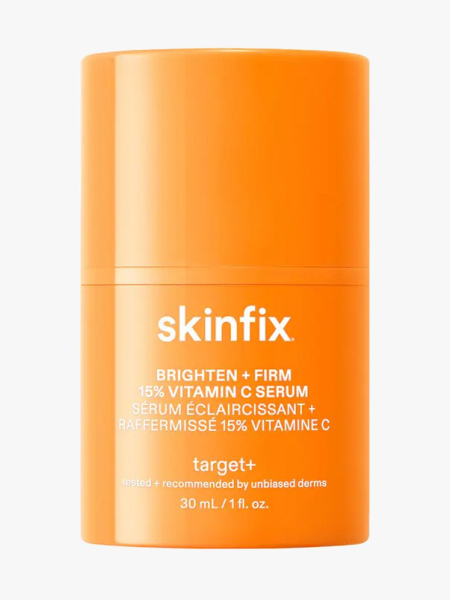
Best with Vitamin C: SkinFix Brighten + Firm 15% Vitamin C Serum
 Save to wishlist
SkinFix
Brighten + Firm 15% Vitamin C Serum
Sephora
Why it's worth it: Though retinol can absolutely lead to glow by speeding up cell turnover and smoothing out that uneven, dull top layer, it’s more of a slow reveal. But if glow is the goal, vitamin C tends to get you there faster. How? It inhibits the action of the enzyme tyrosinase—the main enzyme responsible for the conversion of tyrosine into melanin—and therefore decreases melanin formation. SkinFix’s Brighten + Firm 15% Vitamin C Serum provides a more immediate radiance boost, thanks to 15% tetrahexyldecyl ascorbate, a stable, oil-soluble form of vitamin C that brightens and firms. Even better, our tester found it did all that without any irritation.
It’s paired with a 2% tetrapeptide blend to target discoloration and a 2% PGA peptide complex (PGA is polyglutamic acid, a natural peptide derived from fermentation—typically through soybeans) that pulls in major hydration (up to 5,000 times its weight in water). Antioxidants like ferulic acid and vitamin E add extra protection, while soothing ingredients like aloe and glycerin keep things comfortable. It also has the National Eczema Association’s Seal of Acceptance, which is basically a green light for people with sensitive skin who still want brightening and firming without the typical adjustment period.
Allure commerce editor Sarah Han applying the SkinFix Brighten + Firm 15% Vitamin C Serum
Sarah Han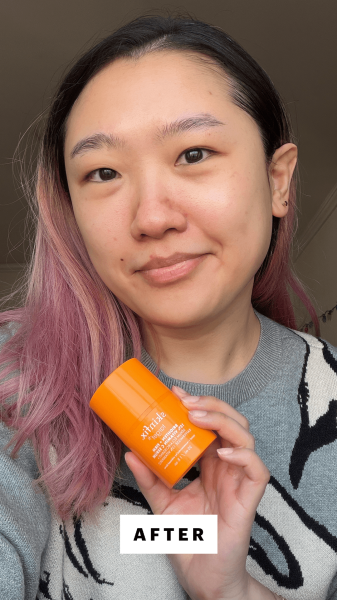
Han after applying the SkinFix Brighten + Firm 15% Vitamin C Serum
Sarah Han
Tester feedback from commerce editor Sarah Han
LargeChevron
“My morning skin-care routine is never complete without a vitamin C serum, but some leave my skin feeling drier than, well, radiant—which is why I look for THDA, a super-stable, sensitive-skin-friendly variation of vitamin C that nixes any potential irritation in the bud. Even better? Vitamin E and ferulic acid work synergistically (kinda like another, more expensive formula whose patent expired!) to make the vitamin C even more stable and more photoprotective. I love that there’s a healthy dose of peptides in this as well, because I will often cocktail the two separately, but I don’t have to for this one! Packaging-wise, something about this wide pump scratches an itch in my brain—I won’t elaborate. I could do with a bit more product for $69, but for what I’m already seeing—some stubborn dark spots around my nose fading—I won’t complain (too much).” —Sarah Han, commerce editor
More to know
LargeChevron
- Key ingredients: 15% tetrahexyldecyl ascorbate (vitamin C), 2% tetrapeptide solution, 2% PGA peptide solution
- Fragrance-free: yes
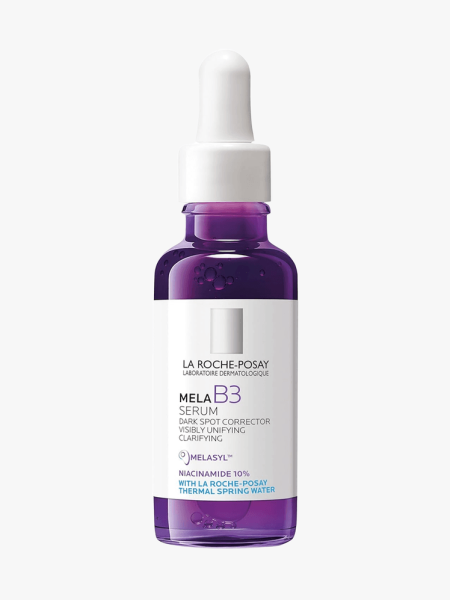
Best with Niacinamide: La Roche-Posay Mela B3 Serum
 Save to wishlist
La Roche-Posay
Mela B3 Serum
Amazon
Dermstore
Ulta Beauty
Allure associate manager of audience development Melanie Curry applying the La Roche-Posay Mela B3 Serum
Melanie Curry
Why it's worth it: Retinol and niacinamide aim for a similar end goal: smoother, more even-toned skin. La Roche-Posay’s Mela B3 Serum takes the gentler route, pairing niacinamide with the brand’s proprietary Melasyl, which acts like a pigment “interceptor” to catch excess melanin before it clusters into visible dark spots. “Niacinamide is one I always bring up when patients ask about retinol alternatives, especially for hyperpigmentation,” says Dr. Obayomi. She notes that this combination of niacinamide with Melasyl brightens while supporting the skin barrier and calming underlying inflammation, which is key for preventing discoloration in the first place, especially in deeper skin tones.
The formula is also infused with mineral-rich thermal spring water to soothe and hydrate. It’s worth pointing out that the water does contain small traces of retinyl palmitate, an ester form of vitamin A. Because it takes one more step than retinol to convert to retinoic acid, it’s generally gentler, which may make it a better fit for reactive skin.
Tester feedback from associate manager of audience development Melanie Curry
LargeChevron
“I started using this serum two months ago, and I've seen small improvements. My dark spots (specifically the acne scars under my chin) have slowly started to fade, and my skin has become slightly more even. A little goes a long way with this serum. A drop or two every night before moisturizing, and your skin becomes less discolored and more plump. And while results do take long (don't they always?), they do happen.” —Melanie Curry, associate manager of audience development
More to know
LargeChevron
- Key ingredients: 10% niacinamide, Melasyl, retinyl palmitate
- Fragrance-free: no
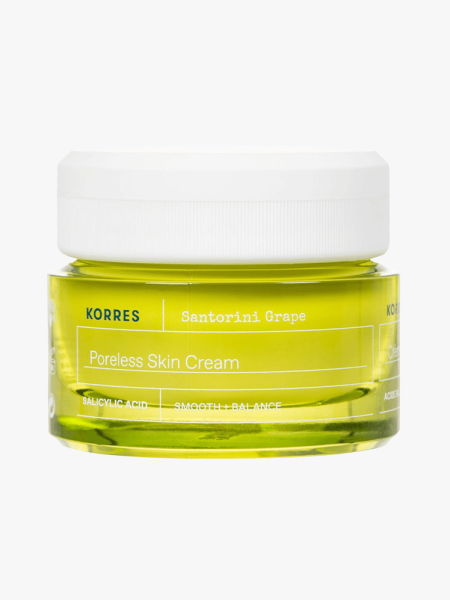
Best with BHAs: Korres Santorini Grape Poreless Skin Cream
 Save to wishlist
Korres
Santorini Grape Poreless Skin Cream
Amazon
Dermstore
Ulta Beauty
Allure associate beauty editor Annie Blay-Tettey applying the Korres Santorini Grape Poreless Skin Cream
Annie Blay-Tettey
Why it's worth it: Beta hydroxy acids and retinol share some common ground: Both help clear congestion and smooth texture by encouraging skin to shed dead cells—they just take different routes to get there. Korres’ Santorini Grape Poreless Skin Cream features a popular BHA, salicylic acid, to dive into pores and break up oil and buildup, making it especially helpful for blackheads and breakouts. (Retinol, by comparison, works deeper at the cellular level, which is why it also targets fine lines.) Grape extract, rich in antioxidants, helps tighten the look of pores and keep excess shine in check, while hyaluronic acid rebalances skin with a hit of hydration. And despite its treatment-level benefits, the texture is surprisingly elegant and creamy—you’d never guess it’s doing quite this much as you slather it on.
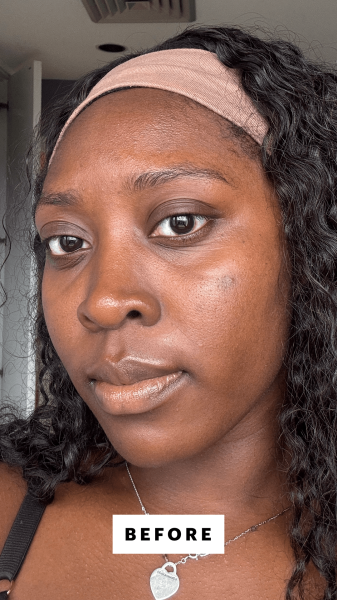
Blay-Tettey before applying the Korres Santorini Grape Poreless Skin Cream
Annie Blay-Tettey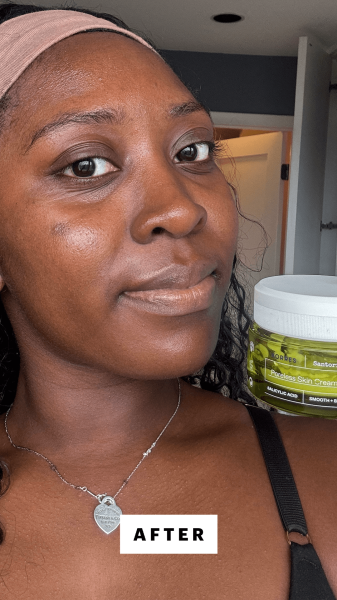
Blay-Tettey after applying the Korres Santorini Grape Poreless Skin Cream
Annie Blay-Tettey
Tester feedback from associate beauty editor Annie Blay-Tettey
LargeChevron
“I love how lightweight yet creamy this moisturizer is, and that it leaves me with a nice glow—for that reason, I use it in the mornings sometimes, too. I also appreciate that it has salicylic acid, so I use it especially when my skin is acneic, but it never irritates my skin.) I use it in the evenings two to three times a week and apply it as the last step of my skin-care routine before I apply lip balm. I'd recommend this for combo to dry skin, but those with oily skin may find it too heavy. I’ll also note the name is misleading because I don't think it helps that much with pores.” —Annie Blay-Tettey, associate beauty editor
More to know
LargeChevron
- Key ingredients: salicylic acid, Santorini grape extract, hyaluronic acid
- Fragrance-free: no
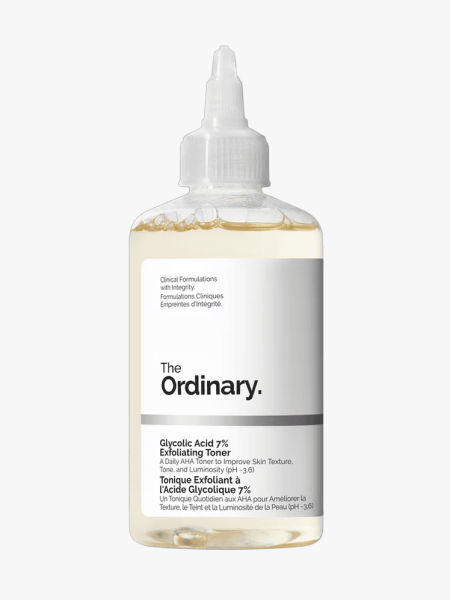
Best with AHAs: The Ordinary Glycolic Acid 7% Exfoliating Toner
 Save to wishlist
The Ordinary
Glycolic Acid 7% Exfoliating Toner
Amazon
Nordstrom
Sephora
Why it's worth it: “Like retinol, alpha hydroxy acids can reduce the appearance of fine lines and improve skin texture and quality,” says Dr. Vieira. “They work by exfoliating the dull, top layers of the skin to reveal fresher skin underneath.” The difference really comes down to timing and depth: AHAs deliver that quicker, surface-level glow, while retinol works more gradually beneath the surface to support longer-term changes. The Ordinary’s Glycolic Acid 7% Exfoliating Toner is for people who want that instant gratification, using glycolic acid to sweep away dead, dulling cells so skin looks brighter and smoother after just a few uses. “Glycolic acid may also stimulate collagen,” he adds. It also includes panax ginseng root extract, which brings a dose of antioxidants to help wake up tired-looking skin.
Dr. Vieira calls this formula a personal favorite for its “lightweight, solution-based texture” that applies in a thin, even layer, but recommends a measured approach: Start once weekly at night and build up to three times as tolerated, since overuse can lead to irritation.
More to know
LargeChevron
- Key ingredients: 7% glycolic acid, aloe, glycerin, panax ginseng root extract
- Fragrance-free: yes
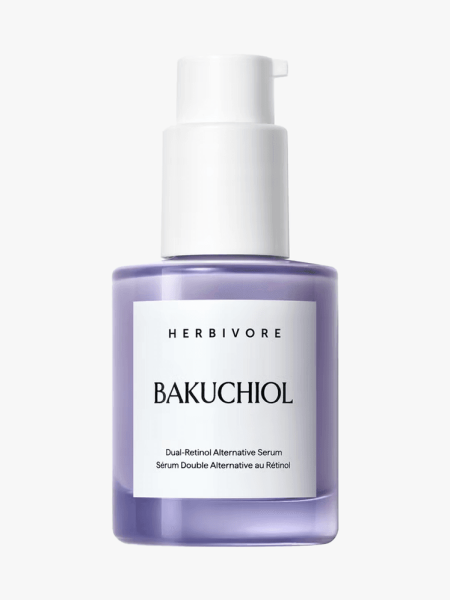
Best with Bakuchiol: Herbivore Botanicals Dual-Retinol Alternative Face Serum
 Save to wishlist
Herbivore Botanicals
Dual-Retinol Alternative Face Serum
Amazon
Dermstore
Ulta Beauty
Lee applying the Herbivore Botanicals Dual-Retinol Alternative Face Serum
Christa Joanna Lee
Why it's worth it: “Bakuchiol is the closest thing we have to a true plant-based retinol alternative, and this serum is the one I point patients to,” says Dr. Obayami. “Studies show that bakuchiol and retinol produced comparable improvements in wrinkles and pigmentation, but the bakuchiol group reported significantly less irritation,” she adds. Quick bakuchiol 101: It functions similarly to retinol because it "increases cell turnover, thereby stimulating collagen production and diminishing signs of aging such as fine lines, wrinkles, skin laxity, and overall photodamage," Sejal Shah, MD, a board-certified dermatologist in New York City, previously told Allure. Herbivore Botanicals’ Dual-Retinol Alternative Face Serum takes that approach a step further with two forms of bakuchiol to improve skin texture and elasticity, alongside Chios mastic tree resin, a plant-based firming ingredient that supports smoother, more resilient-looking skin.
The formula also features hydrating glycerin and a blend of antioxidant-rich plant extracts, such as snow mushroom and mulberry, to keep skin balanced and calm. The texture is a delight to apply, too—lightweight with a slightly jelly-like feel that “absorbs quickly and layers easily under moisturizer,” says Dr. Obayami.
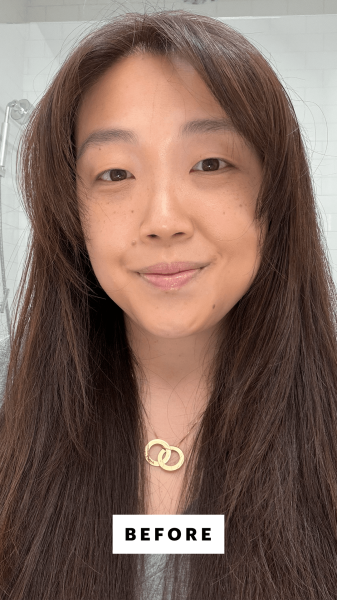
Lee before applying the Herbivore Botanicals Dual-Retinol Alternative Face Serum
Christa Joanna Lee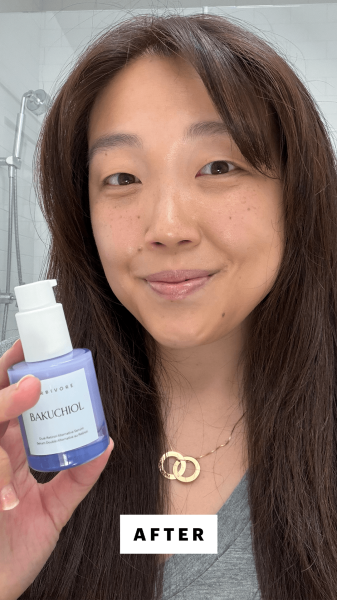
Lee after applying the Herbivore Botanicals Dual-Retinol Alternative Face Serum
Christa Joanna Lee
Tester feedback from Lee
LargeChevron
“It couldn't be easier to add this serum to your routine, no matter your skin type. It layers seamlessly over other skin care and under makeup—plus never causes irritation. Because it skips traditional retinol, the results for fine lines are a bit more subtle, but the plumping and hydration are absolutely legit.” —Christa Joanna Lee, contributing commerce writer
More to know
LargeChevron
- Key ingredients: bakuchiol, chios mastic tree resin, glycerin, mushroom extract, mulberry
- Fragrance-free: yes
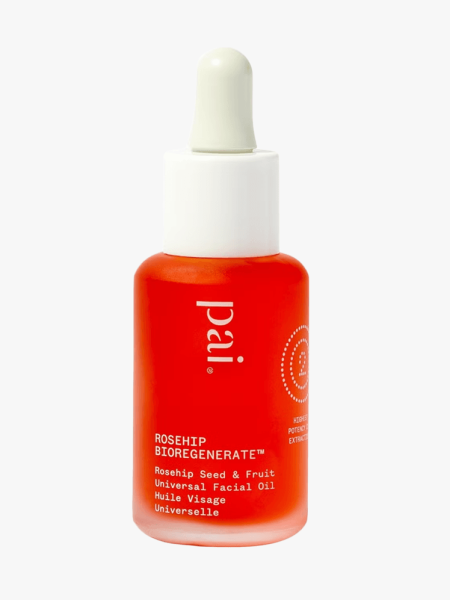
Best with Rosehip Oil: Pai Bioregenerate Rosehip Oil
 Save to wishlist
Pai
Bioregenerate Rosehip Oil
Amazon
Dermstore
Credo Beauty
Why it's worth it: Instead of pushing rapid cell turnover, Pai’s Bioregenerate Rosehip Oil takes a gentler approach, relying on a blend of rosehip seed and fruit extracts to gradually improve texture and tone. Rosehip oil naturally contains small amounts of vitamin A derivatives (like trans-retinoic acid), which helps explain its glow-boosting reputation, but because the concentration is much lower than retinol, the results are slower and more subtle. “This face oil is rich in essential fatty acids and antioxidants, making it especially helpful for mature skin dealing with dryness and uneven texture,” says Mona Foad, MD, a board-certified dermatologist based in Cincinnati, adding that it’s lightweight and “often well tolerated by sensitive skin.” Vitamin E rounds things out, leaving skin smoother, calmer, and more supple—and with no added fragrance, even sensitive skin types can get in on the benefits.
Tester feedback from content director Sophia Panych
LargeChevron
“I don't normally slather on face oil, but when I do, it's the Pai Rosehip Bioregenerate Face Oil. I've been a longtime fan of rosehip oil after it helped my skin heal from a very bad burn in college (paired with doctor-recommended silicone pads). I love the smell (earthy with a faint hint of rose), the texture (oily, obviously, but not thick or heavy), and I love how it leaves my skin looking (glowy and refreshed). I've been a fan since it launched. I layer it on top of my moisturizer when my skin is looking red, dry, or dull and needs some extra TLC. I also apply it during makeup prep, adding a drop to specific areas where I need some extra hydration (like around the nose where my skin can get super dry) or on the tops of my cheekbones, making it so I can skip highlighter. If you work it into your skin, it absorbs nicely and doesn't leave your skin feeling or looking greasy.
I'm a retinol user, and would not replace my retinol with this product as rosehip oil just can't do the same thing vitamin A can, but if you're after a gentle oil that immediately gives your skin a radiant pick-me-up—whether applied before bed or in the morning—then this is a great option.” —Sophia Panych, content director
More to know
LargeChevron
- Key ingredients: rosehip seed extract, rosehip fruit extract, vitamin E, rosemary
- Fragrance-free: yes
Frequently Asked Questions
What are the most popular ingredients that dermatologists consider retinol alternatives?
Retinol might be the gold standard among skin-care products for smoothing texture, softening signs of aging, and helping clear blemishes, but dryness, peeling, and the whole adjustment phase can be a lot. That’s why dermatologists often point to gentler stand-ins, such as:
- Bakuchiol: a plant-derived ingredient Dr. Vieira recommends for patients who want retinol-like benefits without the irritation. “Bakuchiol may have similar effects as retinoids on fine lines and collagen production but is generally much better tolerated on the skin,” he says, adding that while the research is still growing, it’s looking promising.
- Niacinamide, azelaic acid, and peptides: While they don’t do everything retinol does, they can still target concerns like uneven tone, rough texture, blemishes, and visible signs of aging in a way that’s a lot easier for more skin types to handle.
Will I still get peeling or purging with retinol alternatives?
Short answer: usually not—or at least, not to the same extent. “This is one of the biggest benefits of going with a [retinol] alternative,” says Dr. Obayami. “Most patients will not experience the same level of peeling or purging that they would with retinol.” That largely comes down to side effects: Ingredients like bakuchiol, peptides, and vitamin C tend to be much more easygoing, so you’re less likely to deal with that flaky, in-between phase.
The one exception is exfoliating acids—like glycolic or lactic acid—where you might notice a little initial flaking as your skin adjusts. But even then, “it is typically much gentler than what retinol does,” she says. Still, it’s worth easing in slowly, especially if your skin runs sensitive.
Meet the experts
- Mona Foad, MD, a board-certified dermatologist and founder of MONA Dermatology, based in Cincinnati
- Aderonke Obayomi, MD, a board-certified dermatologist and assistant professor at Mount Sinai, based in New York City
- Nazanin Saedi, MD, a board-certified dermatologist based in East Norriton, Pennsylvania
- Carlos Vieira, a board-certified dermatologist at The Dermatology Specialists based in Philadelphia
How we test and review products
When Allure tests a product, our editors look at it from every angle in an effort to best serve you. We review ingredients, scrutinize brand claims, and, when necessary, examine peer-reviewed scientific and medical studies. In addition to testing each and every product that's included in each and every review, we rely on experts who shape their fields, including dermatology, cosmetic chemistry, and medicine, to help us vet the ingredients and formulas.
For our list of the best retinol alternatives, we considered each product's performance across five primary categories: product ingredients and efficacy, packaging, fragrance, texture, and product wear. Every product was determined to have excelled in each category by our editorial team, which is composed of in-house writers and editors as well as contributors—along with special consideration from board-certified dermatologists. To learn more information on our reporting and testing processes, read our complete reviews process and methodology page.
Our staff and testers
A beauty product is a personal purchase. You might be searching for a face cream to address persistent dryness or a new nail product to add to your Sunday self-care routine; you may simply be browsing around for the latest launches to hit the hair market. No matter what you seek or your individual needs and concerns, Allure wants to ensure that you love anything we recommend in our stories. We believe that having a diverse team of writers and editors—in addition to the wide range of outside testers and industry experts we regularly call upon—is essential to reaching that goal.
After all, can we really say a skin-care product is the "best" for people over 50 if the only testers we've solicited opinions from folks who have yet to hit 30? Can we honestly deem a high-end diffuser worthy of your hard-earned cash if it’s never been tested on curls? We're proud that our staff spans a wide range of ages, skin tones, hair textures, genders, and backgrounds, which means that we are able to fairly assess any beauty product that comes into the beauty closet.
Leave a Reply